
 Facebook
 Twitter
 LINE
LINE
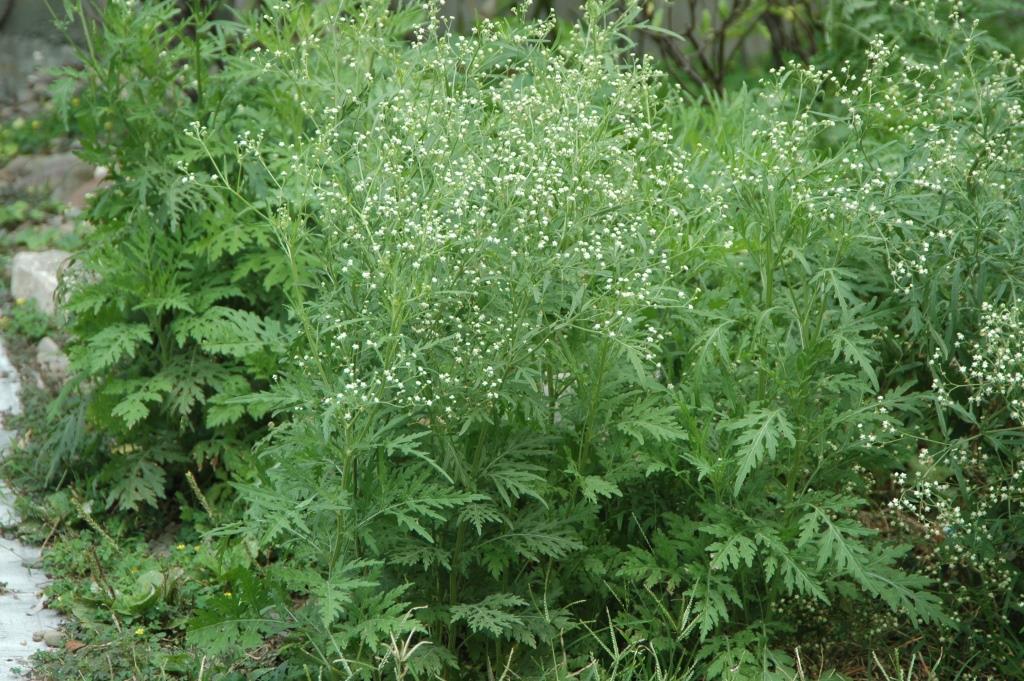
Flowers of the guayule look like those of the gypsophila (滿天星), while its saplinglooks like the wormwood (艾草). Many unsuspecting people may pick it up for watching and even for food. In fact, you can tell the guayulefrom the gypsophilaby thestalk. The guayule has a thicker stalk on which there is pubescence. Although it is not difficult to tell them apart, people are advised not to pickup unknown wild plants arbitrarily. The guayule’s pollen, pubescence and glandular hairsmay cause skin allergy and have been recorded to cause poisoning to the sheep grazing the guayule in foreign countries. No report of poisoning due to eating the guayule has been filed in Taiwan. So, please do not panic. What we can do now is to work together with the government to recognize it and remove it.
The best time to control and/or get rid of the guayuleis before it blooms in early spring by reducing its chance of pollination and seed propagation. People are urged to remove the guayule manually or by a simpletool. Farming Equipment may be used to turn the farm land. After the guayuleis removed, please place it in a black plastic bag tomake itdry or rot and then burn it.As the guayule may cause allergies to humans, pleasewear long-sleeved shirts, gloves and a mask, when clearing it. Remember to wash hands as soon as the clearing is done, said the Agriculture Bureau.