
:::
Current Location
Home
> Main Tree
> News
> News
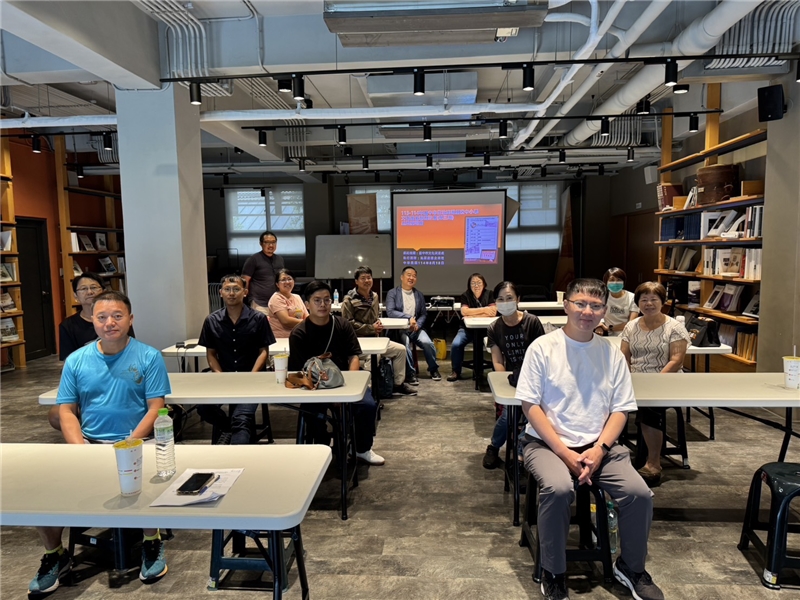
To further advance Taichung City’s cultural relic survey and preserve the century-long educational history of its elementary and junior high schools, the Cultural Heritage Department held the “Taichung City Survey and Archiving Project on Cultural Relics of Elementary and Junior High Schools Founded during the Japanese Colonial Period (Phase III)” results presentation on the afternoon of August 18, 2025. Schools involved in this phase of the survey were invited to participate and explore new directions for the preservation of campus cultural assets.
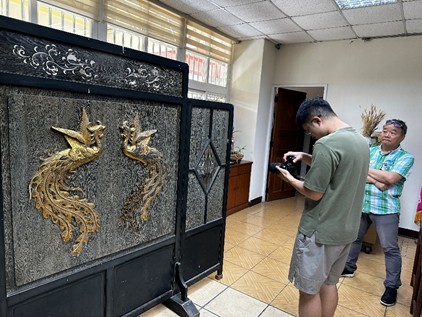
According to the Cultural Affairs Bureau, this project was commissioned to Lan Cuo Creative Company and initiated by the Cultural Heritage Department in 2024, continuing the work of Phases I and II. The Phase III survey focused on 24 schools across nine districts—Houli, Shengang, Daya, Fengyuan, Shigang, Tanzi, Taiping, Xinshe, and Dongshi. A total of 203 cases encompassing 691 items were documented, yielding fruitful results. In accordance with the Ministry of Culture’s Guidelines for the Registration and Monitoring of Cultural Relics, the survey documented and analyzed the cultural value of a wide variety of relics, including historical documents, teaching materials, and educational equipment that reflect the evolution of Taiwan’s school system.
At the results presentation, in addition to unveiling the survey results and classification of relics, the Cultural Heritage Department provided detailed explanations on potential nominations for heritage designation and preservation recommendations. Historical images of significant campus relics were also displayed, and active exchanges were held with school representatives to discuss preservation strategies. The Cultural Heritage Department noted that it will continue to promote the nomination of potential relics for registration as cultural assets, while also encouraging schools to revitalize their history rooms and integrate local history into curricula, so that cultural heritage is not confined to static displays but brought into everyday life and teaching, becoming a shared knowledge and resources across generations.
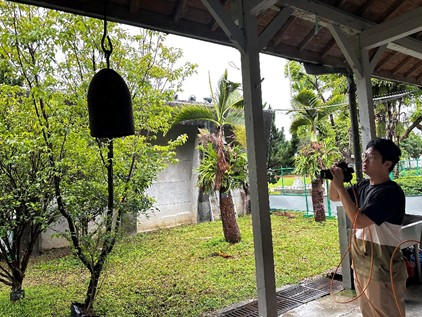
This phase of the survey also identified several items with potential to be recognized as antiquities, such as the “Promotion of Education” plaque preserved at Tuniou Elementary School, dating back to 1926 (Taishō 15), which corresponds with the historical context of the “Tuniou Boundary Marker” once located at Tuniou Public School during the Japanese colonial period. Another distinctive finding of this phase is the preservation of “school bells made from bomb shells.” For example, Neipu, Wengzi, and Dongbao Elementary Schools had repurposed bomb shells as school bells, reflecting both the fact of post-war resource shortages and the history of material reuse in early educational settings.
The Cultural Affairs Bureau added that Taichung City launched the “Survey Project on Cultural Relics of Elementary and Junior High Schools Founded during the Japanese Colonial Period” in 2017. The project is divided into four phases by region. Phase I covered the original Taichung urban area, surveying 22 schools and concluding in 2019 with the documentation of 515 cases comprising 3,274 items. Phase II covered Dajia, Da’an, Waipu, and Shalu Districts, surveying 13 schools and concluding in 2023 with 189 cases comprising 579 items; as part of this phase, the Masakichi Kaneko Memorial Monument at Dajia Public School was officially designated and announced as a general antiquity. Phase III centers on 24 schools across nine districts, including Houli, Shengang, Daya, Fengyuan, Shigang, Tanzi, Taiping, Xinshe, and Dongshi. The forthcoming Phase IV will extend to Qingshui, Wuqi, Longjing, Dadu, Wuri, Dali, and Wufeng Districts, thereby completing the comprehensive survey of schools established during the Japanese colonial period throughout the Greater Taichung area.
The Cultural Heritage Department also sincerely invites the public to take interest in the historical memories preserved within their local schools, and to support the documentation, revitalization, and transmission of century-old campus heritage. Together, these efforts will safeguard the educational and cultural legacy of Taichung over the past hundred years. For more information on cultural heritage, please visit the official website of the Cultural Heritage Department of Taichung City (https://www.tchac.taichung.gov.tw/).
Taichung’s Century-Old School Relics Survey Yields Fruitful Results, Bomb-Shell School Bells Draw Attention
According to the Cultural Affairs Bureau, this project was commissioned to Lan Cuo Creative Company and initiated by the Cultural Heritage Department in 2024, continuing the work of Phases I and II. The Phase III survey focused on 24 schools across nine districts—Houli, Shengang, Daya, Fengyuan, Shigang, Tanzi, Taiping, Xinshe, and Dongshi. A total of 203 cases encompassing 691 items were documented, yielding fruitful results. In accordance with the Ministry of Culture’s Guidelines for the Registration and Monitoring of Cultural Relics, the survey documented and analyzed the cultural value of a wide variety of relics, including historical documents, teaching materials, and educational equipment that reflect the evolution of Taiwan’s school system.
At the results presentation, in addition to unveiling the survey results and classification of relics, the Cultural Heritage Department provided detailed explanations on potential nominations for heritage designation and preservation recommendations. Historical images of significant campus relics were also displayed, and active exchanges were held with school representatives to discuss preservation strategies. The Cultural Heritage Department noted that it will continue to promote the nomination of potential relics for registration as cultural assets, while also encouraging schools to revitalize their history rooms and integrate local history into curricula, so that cultural heritage is not confined to static displays but brought into everyday life and teaching, becoming a shared knowledge and resources across generations.
This phase of the survey also identified several items with potential to be recognized as antiquities, such as the “Promotion of Education” plaque preserved at Tuniou Elementary School, dating back to 1926 (Taishō 15), which corresponds with the historical context of the “Tuniou Boundary Marker” once located at Tuniou Public School during the Japanese colonial period. Another distinctive finding of this phase is the preservation of “school bells made from bomb shells.” For example, Neipu, Wengzi, and Dongbao Elementary Schools had repurposed bomb shells as school bells, reflecting both the fact of post-war resource shortages and the history of material reuse in early educational settings.
The Cultural Affairs Bureau added that Taichung City launched the “Survey Project on Cultural Relics of Elementary and Junior High Schools Founded during the Japanese Colonial Period” in 2017. The project is divided into four phases by region. Phase I covered the original Taichung urban area, surveying 22 schools and concluding in 2019 with the documentation of 515 cases comprising 3,274 items. Phase II covered Dajia, Da’an, Waipu, and Shalu Districts, surveying 13 schools and concluding in 2023 with 189 cases comprising 579 items; as part of this phase, the Masakichi Kaneko Memorial Monument at Dajia Public School was officially designated and announced as a general antiquity. Phase III centers on 24 schools across nine districts, including Houli, Shengang, Daya, Fengyuan, Shigang, Tanzi, Taiping, Xinshe, and Dongshi. The forthcoming Phase IV will extend to Qingshui, Wuqi, Longjing, Dadu, Wuri, Dali, and Wufeng Districts, thereby completing the comprehensive survey of schools established during the Japanese colonial period throughout the Greater Taichung area.
The Cultural Heritage Department also sincerely invites the public to take interest in the historical memories preserved within their local schools, and to support the documentation, revitalization, and transmission of century-old campus heritage. Together, these efforts will safeguard the educational and cultural legacy of Taichung over the past hundred years. For more information on cultural heritage, please visit the official website of the Cultural Heritage Department of Taichung City (https://www.tchac.taichung.gov.tw/).
- Data update: 2025-08-25
- Publish Date: 2025-08-19
- Source:
- Hit Count: 281

Facebook
Twitter
LINE