 Facebook
 Twitter
 LINE
LINE
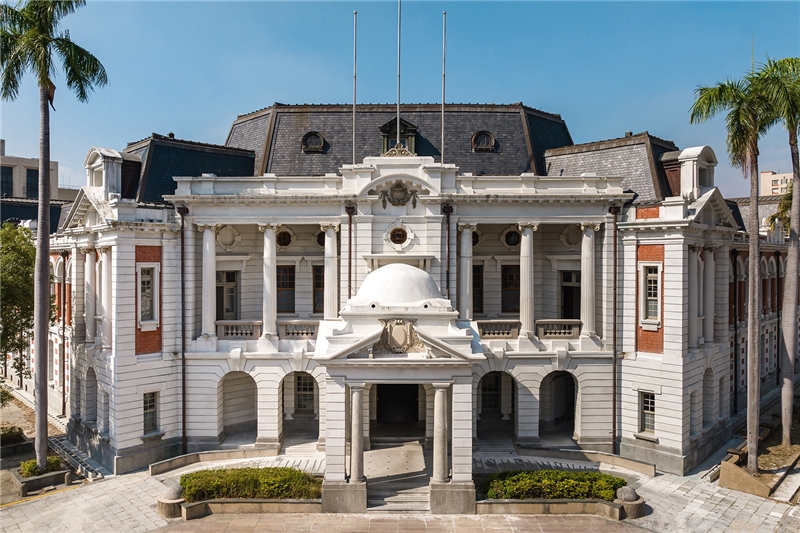
Standing in the old district of Taichung, the national historic site "Taichung State Hall" is about to reappear its elegant and solemn architectural elegance from a century ago. This grand building, established in 1913, was designed by Matsunosuke Moriyama, a technician from the Repair and Construction Section of the Governor-General's Office during the Japanese rule period. It shares the same lineage as the current Presidential Office Building (formerly the Office of the Governor-General of Taiwan). It is not only an important paradigm of modern official buildings in Taiwan, but also carries the historical memory of Taichung's urban development, witnessing the evolution of urban governance and architectural aesthetics over the past century.
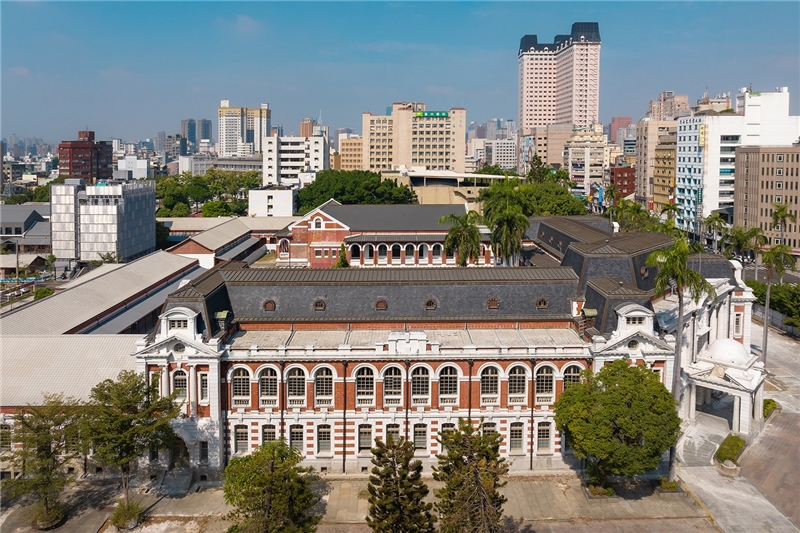
The Bureau of Cultural Affairs stated that Matsunosuke Moriyama was an important promoter of the development of modern public buildings in Taiwan. His works blend Western Neoclassical styles with modern architectural techniques, balancing spatial functionality and urban landscapes. Taichung State Hall adopts a street-corner main entrance design that was rare at the time, using the corner tower as the visual focus, paired with symmetrical guard buildings on the left and right, and wing buildings extending along the street, demonstrating the steady and expansive momentum of an official government office. The entrance portico (porte-cochère) protrudes outward, and the facade utilizes elements such as stucco imitating stone masonry, classical orders, domes, triangular pediments, rounded pediments, and medallion decorations, fully demonstrating the characteristics of the Taisho era when architecture integrated Western classical aesthetics with modern trends of thought.
The Bureau of Cultural Affairs pointed out that one of the most representative architectural features of Taichung State Hall is its elegant Mansard Roof. This double-sloped roof originating from France not only shapes an elegant and solemn architectural outline, but also effectively improves the utilization efficiency of the attic space, combining both aesthetics and practical functions. The bull's-eye windows (oeil-de-boeuf) dotted across the roof add delicate and rhythmic facial changes to the building, while serving both lighting and ventilation functions. The overall building uses horizontally extending lines as the main body, paired with rounded arc shapes and exquisite decorative details, creating a well-layered and elegantly proportioned architectural beauty.
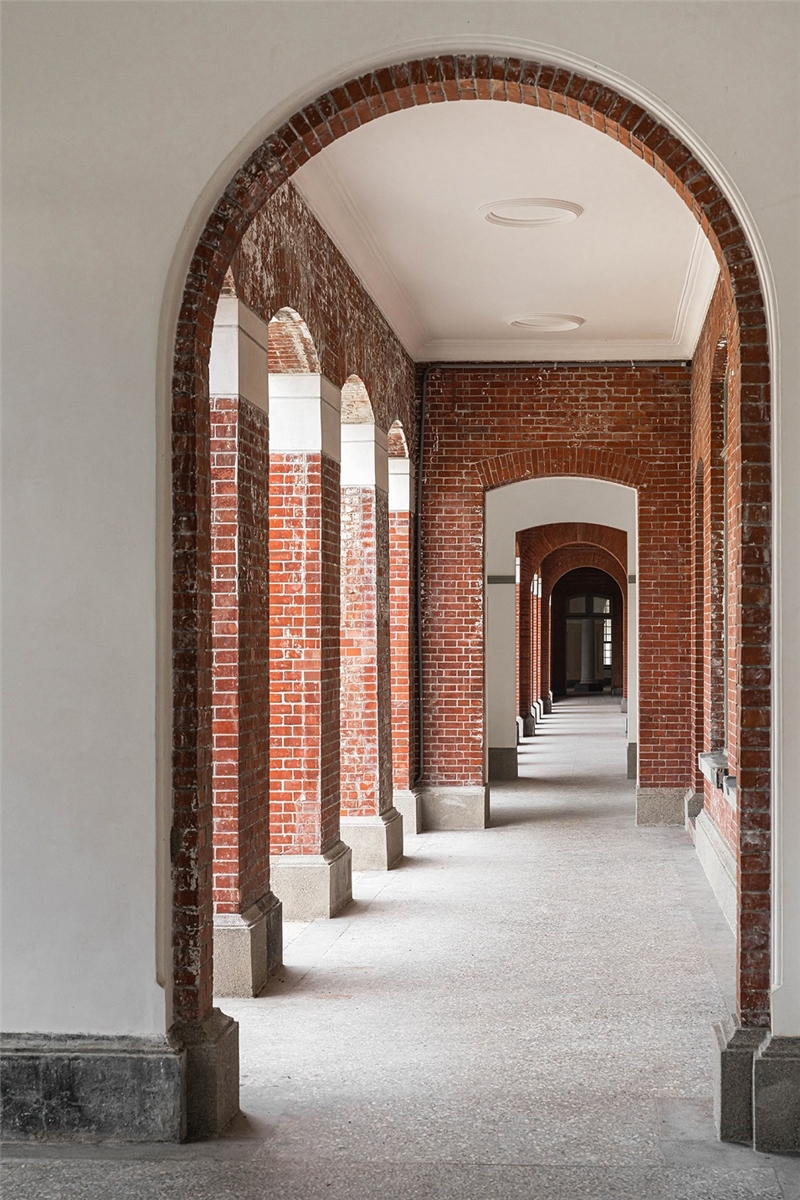
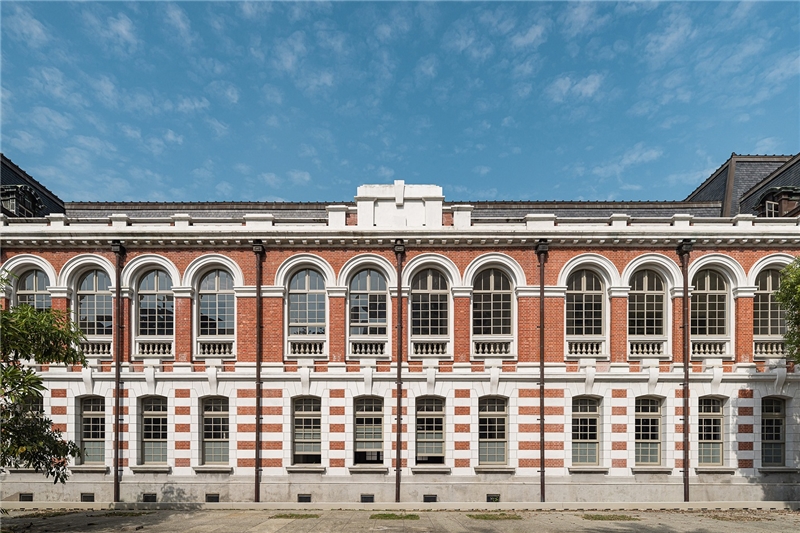
In addition, strolling around the State Hall, the most impressive feature is undoubtedly the classic red bricks and grayish-white decorative bands. Matsunosuke Moriyama utilized warm and thick red brick walls, paired with grayish-white imitation stone decorative bands and washed terrazzo bases imitating classical stone masonry, forming a sharp yet harmonious color contrast. The heavy sense of history displayed by the red bricks, combined with the horizontal lines outlined by the grayish-white decorative bands, as well as detailed designs such as arched window tops and narrow-and-long window openings, together construct the highly recognizable architectural vocabulary of the State Hall, making it a timeless and classic scenery in Taichung's urban landscape.
The Bureau of Cultural Affairs emphasized that Taichung State Hall is not only a national historic site of immense historical value, but also an important witness to Taichung's century-old urban development. In the future, the State Hall will continue to serve as an important venue for cultural exchange in the old district. Through exhibitions, arts and cultural activities, and opening up the space, it will guide the public to experience the beauty of architecture spanning across centuries up close. Furthermore, to allow the public to deeply explore the stories of the State Hall, the Bureau of Cultural Affairs has specially published the first monograph that completely introduces the State Hall, titled Wings of the City—A Century of Soaring at Taichung State Hall. The book contains over 200 precious historical photos and uses illustrated diagrams to unveil little-known spatial stories such as the underground shelters and the roof catwalks. Citizens and friends are cordially invited to borrow the book from public libraries in various districts of Taichung City, and jointly savor the cultural depth of Taichung amidst the light and shadow interwoven between the red bricks and the Mansard roof.