 Facebook
 Twitter
 LINE
LINE
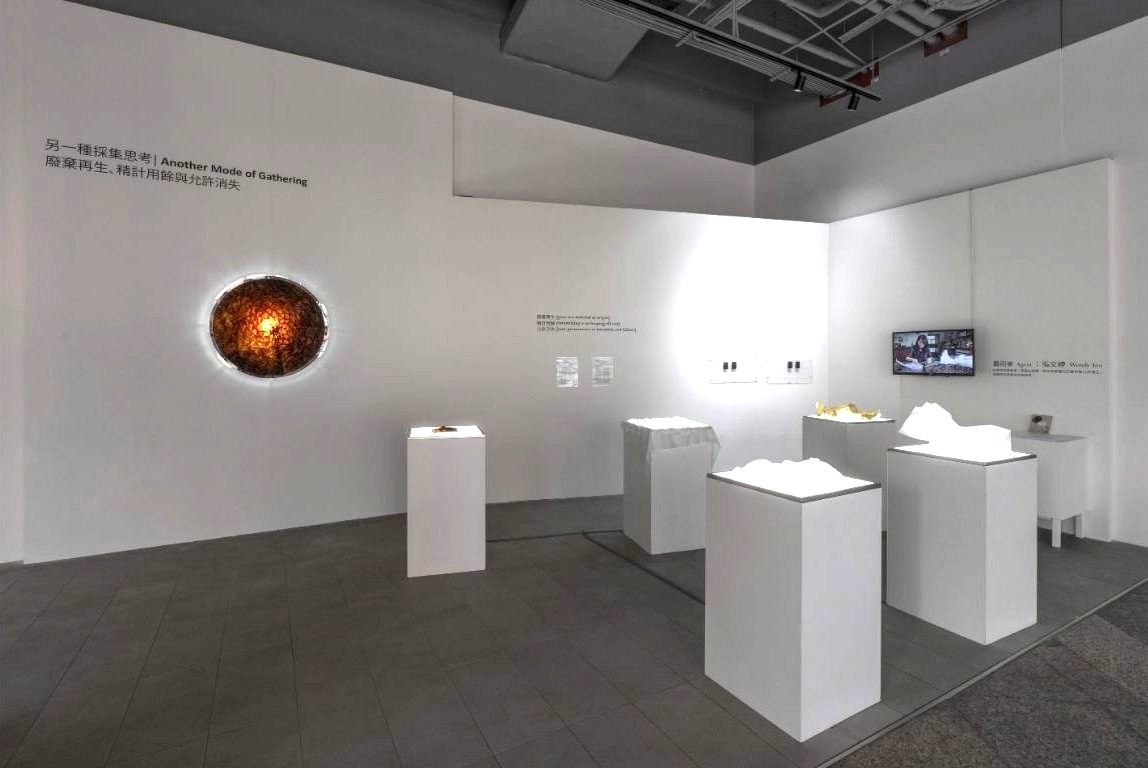
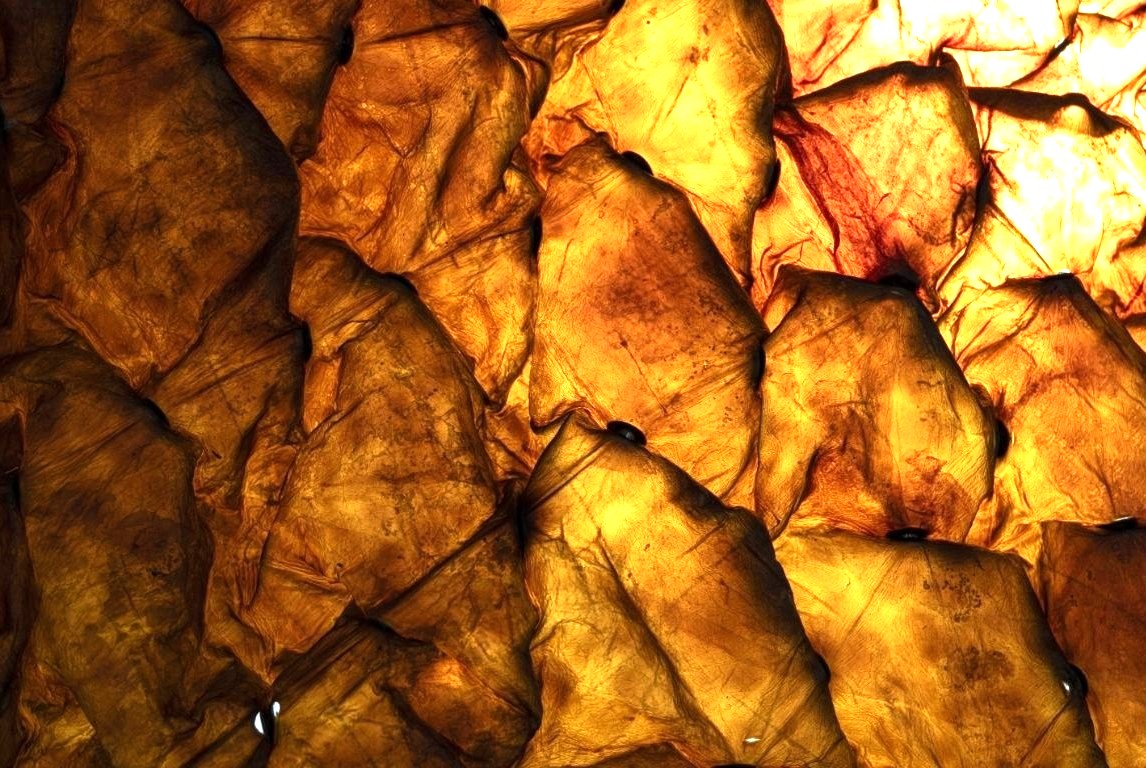
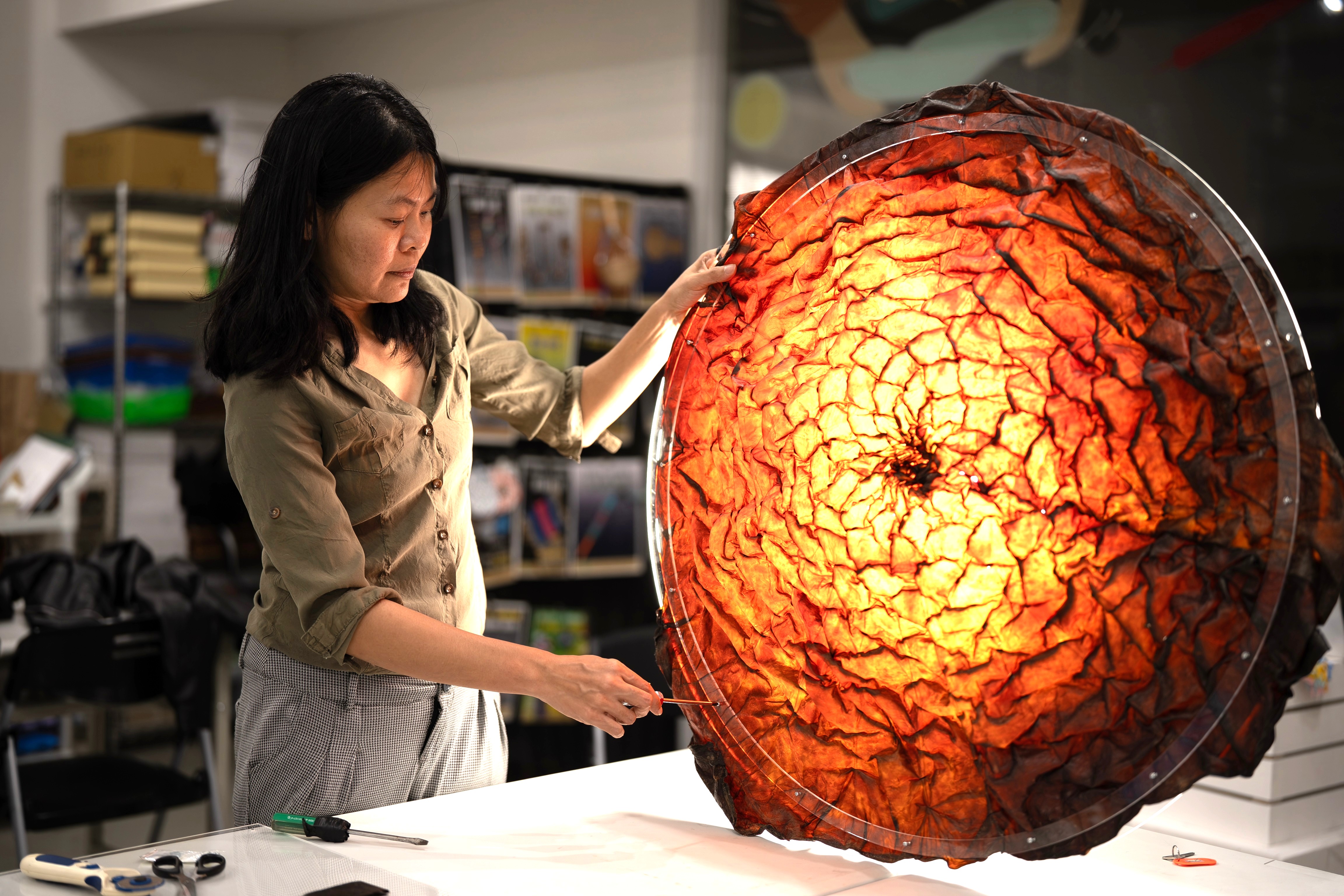
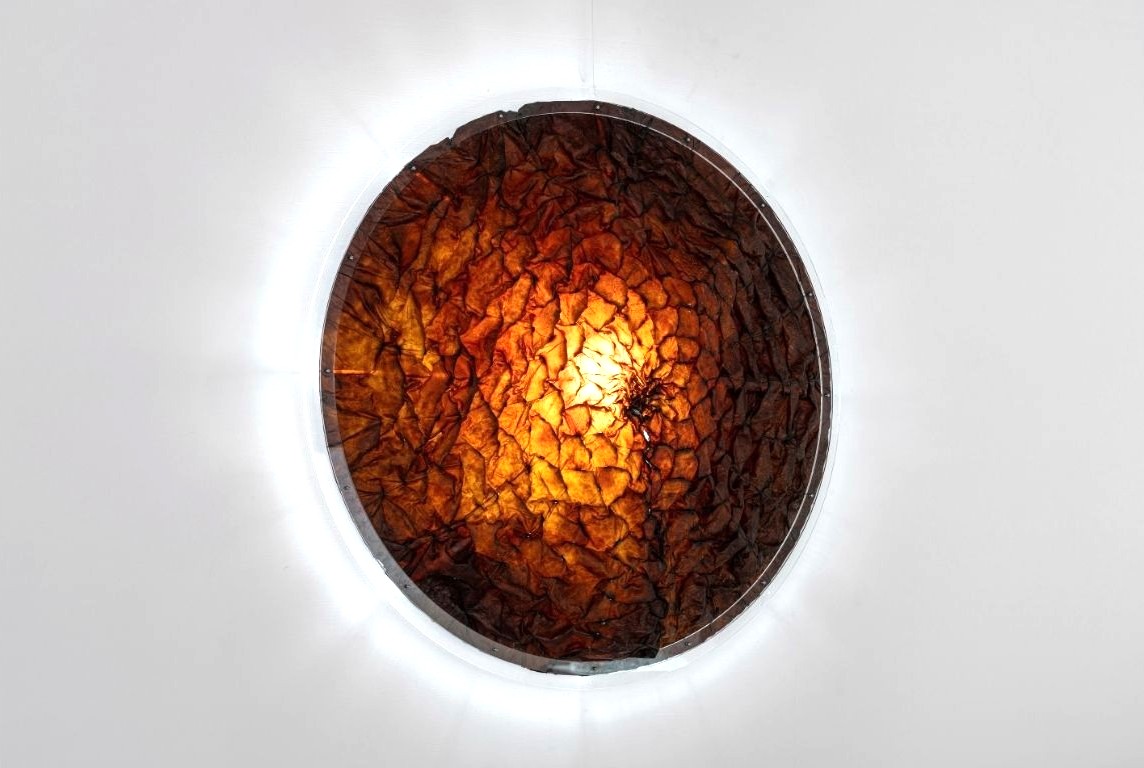
The Museum of Fiber Arts, Taichung (MOFiA) continues its “And Then—Conversations with the Collection” contemporary art commission project with its fourth exhibition, featuring Malaysian-Chinese architect Wendy Teo. Using plant-based leather produced by the fermentation of pineapple waste and microbial cellulose membranes, Teo has created the installation piece Another Mode of Gathering: Post-use Regeneration, Calculated Use of Off-cuts, and Allowing Disappearance. The exhibition runs from 18 April until 31 July, inviting visitors to experience a multi-sensory encounter that brings together visual art, spatial structures, and distinctive organic aromas.
Hui-Hua Chien, Director of the MOFiA, Taichung, explained that Teo drew inspiration from a bamboo scoop in the museum’s collection, collaborating with international regenerative-material research teams including Borneo Laboratory, a leading biotechnology organisation in Southeast Asia. The work is constructed from plant-based leather developed through the fermentation of pineapple waste and microbial cellulose membranes. This innovative, environmentally conscious material not only possesses the flexibility, durability, and fire-resistant qualities associated with conventional leather, but it will also naturally decompose over time as environmental conditions take effect, ultimately returning to the earth. In doing so, the work embodies the exhibition’s central concept of “Allowing Disappearance,” challenging the conventional expectation that artworks must be permanently preserved and embracing a genuinely sustainable ecological approach.
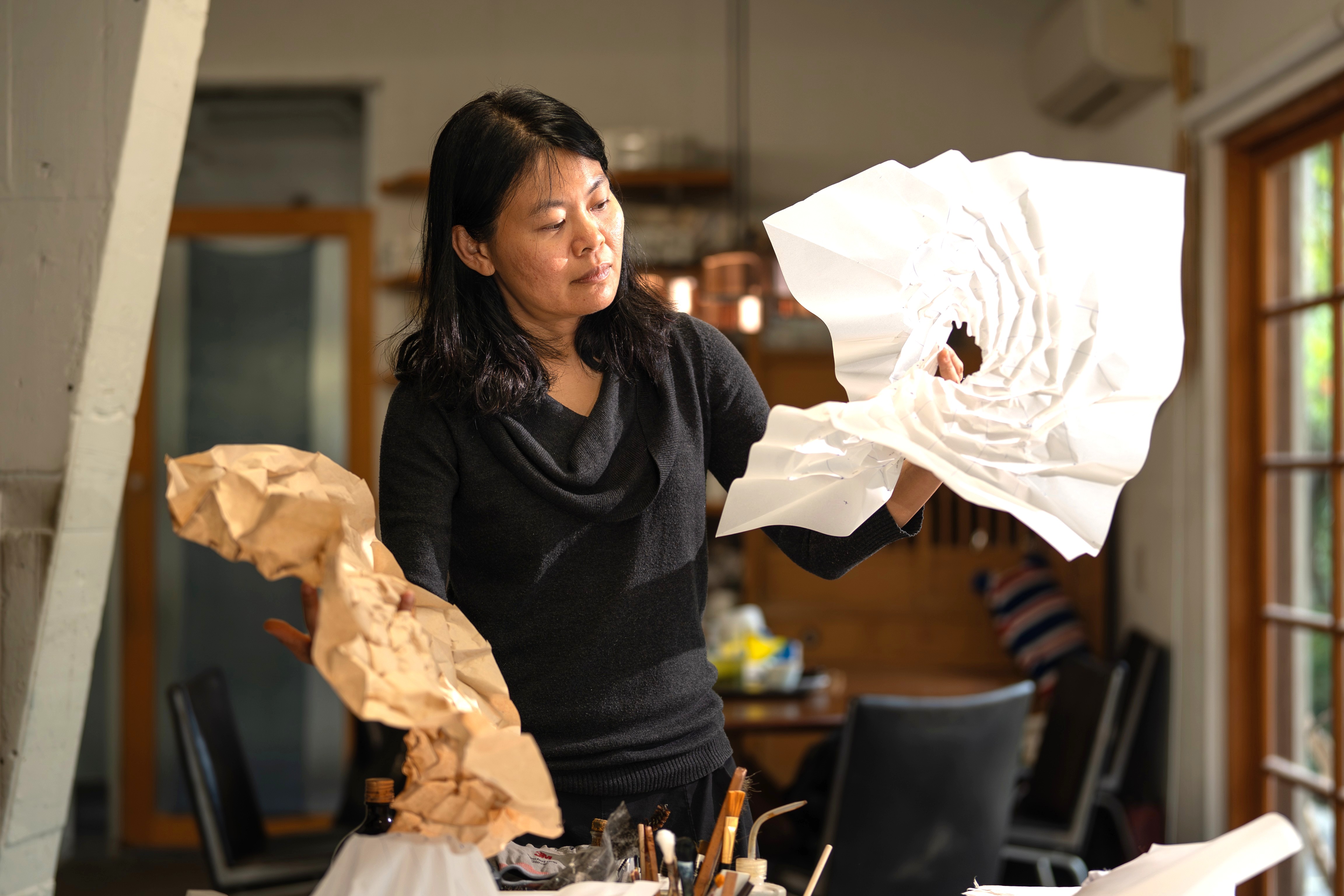
According to Teo, the bamboo scoop was once an essential agricultural tool used for gathering crops in rural communities. However, with the rise of agricultural automation and changing patterns of production and consumption, it has gradually disappeared from everyday life. Through this project, she seeks to re-examine both the form of the bamboo scoop and the labour embedded within it, while introducing plant-based leather made from pineapple waste as a contemporary response. Throughout the creative process, Teo also embraced the principle of “Calculated Use of Off-cuts,” applying careful planning and technological processes to minimise material waste. Any remaining material is reintroduced into the fermentation cycle for reuse, allowing the work to seek a dynamic balance between time, material, and environment.
Alongside material innovation, Teo draws upon her architectural expertise to transform flat sheets of plant-based leather into expansive three-dimensional curved surfaces and diamond-shaped structures through precise calculations and folding techniques. The resulting forms create a powerful visual tension between two-dimensional material and three-dimensional space. Throughout the exhibition period, the work will continue to respond to changes in temperature and humidity, enabling visitors to experience the life cycle of organic materials through both sight and smell.
MOFiA noted that the “And Then—Conversations with the Collection” project was launched in late 2025 and is curated by fibre artist Yang Wei-Lin. The project invites seven interdisciplinary artists from Taiwan and abroad to engage in dialogues across time with objects from the museum’s collection, generating new interpretations and creative responses. Through these artistic interventions, historical artefacts are reviewed through contemporary perspectives, opening new possibilities for understanding the museum’s collection.
Upcoming commissions will feature Japanese artist Aya Yamanaka, Netherlands-based Taiwanese artist Pei-Ying Lin, and Taiwanese artist Chen-Ling Lee. A series of workshops and public talks will also run alongside the exhibitions, offering audiences further opportunities to engage with the artists and their creative processes. For further information about exhibitions and events, please visit the Museum of Fiber Arts, Taichung website or follow the museum’s Facebook page .