
 Facebook
 Twitter
 LINE
LINE
Taichung City Government
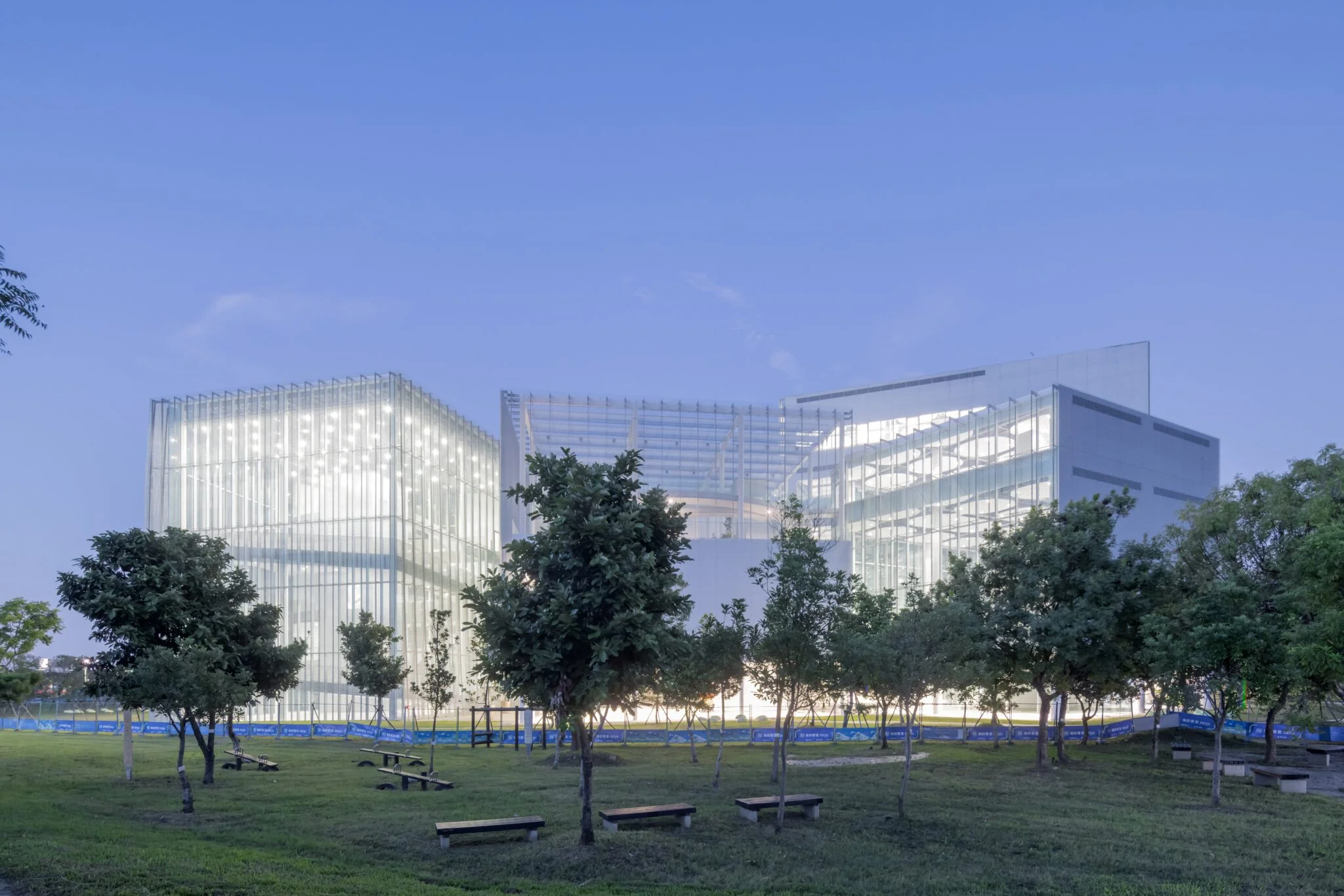
The Taichung Art Museum (hereinafter referred to as “TcAM”) officially opened on December 13, 2025. A new arts and culture landmark co-developed by TcAM and the Taichung Public Library, the Taichung Green Museumbrary is situated amid the greenery of Taichung Central Park. It is a cross-disciplinary and inclusive cultural venue where art, reading, architecture, and nature converge in the city, expanding imagination and enriching public cultural life. Rooted in Taichung’s rich historical context and urban experience, TcAM focuses on how art responds to contemporary life and public issues. Through diverse practices including exhibition curation, research and collections, and education and public outreach, TcAM is steadily developing into a museum grounded in Central Taiwan, open to the public, and actively engaged in international dialogue, serving as an important public space for civic learning, exchange, and cultural experience.
Building on TcAM’s inaugural exhibition, A Call of All Beings: See you tomorrow, same time, same place, which examines the relationships among people, all living beings, the natural environment, and the city, TcAM’s 2026 exhibition program presents a juxtaposition of tropical culture, technology art, and research on the art history of Central Taiwan. Through a series of international collaborative exhibitions and locally grounded, research based curatorial projects, TcAM will outline the diverse facets of Central Taiwan within the global art context, demonstrating how art responds to contemporary lived experience and historical trajectories. Alongside the exhibitions, a range of art education and public outreach programs will create multifaceted visitor experiences and further integrate art into everyday life.
Two International Collaborative Curatorial Projects: Cross-Cultural Dialogues from Tropical Culture to Digital Perception
Horizon Ablaze will open in May. The exhibition is co-curated by veteran curator Nobuo Takamori, Tessa Maria Guazon of the Jorge B. Vargas Museum and Filipiniana Research Center (University of the Philippines Diliman), Juan Canela, Chief Curator of the Museum of Contemporary Art of Panama (MAC Panama), and Jennifer Choy. Bringing together curatorial teams from Taiwan, the Philippines, and Panama, the project has taken shape through presentations and research exchanges across multiple locations, gradually evolving into an organic curatorial initiative centered on tropical culture and embodied experience. Featuring artists and works from Taiwan, Southeast Asia, Southern Europe, and Central America, the exhibition examines how tropical climates shape cultural experience, bodily perception, and artistic practice, while illuminating the interactions among different tropical regions and cultural contexts. Scheduled to run through Taiwan’s peak summer season, the exhibition explores the many facets of heat across diverse cultural settings through a wide range of media and perspectives. Grounded in colonial historical contexts, it revisits the tropical imaginary and reflects on the dialectical relationship between modernity and locality.
Daito Manabe Solo Exhibition, EPISTEMIC PROTOCOLS-AI and Perception (working title) will be the artist’s first major solo exhibition in Taiwan. Curated by Hong Kong media art curator Joel Kwong, Program Director of the Microwave International New Media Arts Festival, the exhibition is scheduled to open in September. An internationally renowned media artist, Manabe is widely recognized for his work associated with Tokyo’s eight-minute handover presentation at the Rio 2016 Olympic Games closing ceremony. A graduate of Tokyo University of Science, Manabe draws on an academic background in pure mathematics and music, with creative thinking that moves fluidly between the two. His work is regarded as a new model of practice situated at the intersection of art, science, engineering, and popular culture. Conceived specifically for the museum’s double-height galleries, the exhibition will present newly developed works integrating algorithms, music programming, and three-dimensional architectural data. By weaving sound, moving image, and space into a technologically charged, immersive environment with striking audiovisual effects, it seeks to explore and open up new possibilities for art and technology.
Two Locally Curated Exhibitions: Revisiting the Formation and Transformation of Central Taiwan’s Art History
Since the Taichung Art Museum officially commenced operations as an institution in 2024, it has undertaken wide-ranging exploration and research into the city’s art history and artistic archives. Beginning in 2026, parts of this ongoing work will be progressively developed into a series of exhibition programs, presenting multiple perspectives on the formation and transformation of art history in Central Taiwan. Opening in May, The Dadu Alliance: Inter-object Diplomacy between Mountains and Sea (working title) is a research-based exhibition curated by Assistant Professor Yü-Chang Shen of Tunghai University. It marks Taichung Art Museum (TcAM)’s first systematic, research-driven review of the development of fine arts in the Taichung region. Centered on the Dadu Tableland in Taichung, the exhibition proposes the concept of inter-object diplomacy, emphasizing that the formation of a city is not shaped by humans alone, but emerges through the mutual influence, negotiation, and coexistence of land, rivers, crops, technologies, architecture, and communities. Approaching the subject through two overarching lenses, terroir and the city, the exhibition traces the trajectory of artistic development in the Taichung area and invites audiences to reconsider Central Taiwan’s role in Taiwan’s historical and artistic evolution. Bringing together more than 70 works by artists across generations, along with multiple newly commissioned contemporary works, the exhibition unfolds through four thematic sections. It guides visitors in looking back at how Central Taiwan, shaped by the interweaving of the natural environment, transportation infrastructure, industrial activity, and everyday life, gradually formed a distinctive cultural character, and how its art has moved from historical contexts toward a contemporary horizon.
Swinging A Go Go-The Interdisciplinary Legend Shui-He Wang (working title) is scheduled to open in late August. Developed from TcAM’s art archive initiative as its primary research and development framework, the project focuses on Central Taiwan’s important senior artist Shui-He Wang, bringing together materials such as architectural and design drafts, sculptural works, oral history interviews, and urban field research. The exhibition is curated by Assistant Professor Yuan-Ta Hsu of the Department of Art History, Tainan National University of the Arts. Widely regarded as one of the most representative self taught creators in Taiwan’s art history, Wang’s works appeared across film advertising, the tourism and leisure industries, and the development of popular culture of his time. He also left Taichung with a substantial body of architectural and visual design works marked by a distinct personal style, demonstrating an integrative approach across scale and media. Through Wang’s creative practice, TcAM reexamines key trajectories in postwar Taichung’s visual culture and urban landscape, showing how a generation of creators responded to the demands of their era and social change, shaped vernacular aesthetics, and invites a renewed reflection on what Central Taiwan’s art history means today. One of the exhibition highlights will be a digital 3D model of the Nan Yeh Dance Club. Through digital reconstruction and virtual reality (VR), the project re-creates a major entertainment venue in Taichung from the 1970s to the 1980s, guiding visitors to begin with spatial scale and atmosphere, experience the city ambience of the a go go era, and build connections with local history and urban memory.
From Art Archives to an International Forum: Deepening the Writing of Central Taiwan’s Art History
Building on its ongoing research into the art history of Central Taiwan, the Taichung Art Museum (TcAM) will continue in 2026 to examine how artistic development has responded to the region’s urban landscape and local characteristics. With art archives as a point of departure, TcAM will carry out field investigation and systematic research. The research will center on Japanese language letters, diaries, and manuscripts left in the early 1950s by sculptor Hsia-Yu Chen (1917 to 2000), exploring the development of and exchanges within Taiwan’s early postwar arts community. In parallel, TcAM will organize and study the creative notes, sketches, and correspondence of postwar woman artist Hsing-Wan Chen (1951 to 2004), as well as writings and related archives of artist and art critic Tsai-Chin Ni (1955 to 2015), who also served as Director of the National Taiwan Museum of Fine Arts. By working through these first-hand art archives, TcAM will illuminate artists’ creative trajectories and their historical contexts, and, from multiple perspectives, build a richer and more diverse picture of Taiwan’s art history.
In addition, TcAM plans to convene an international forum in the second half of the year with a focus on collections and art history, exploring how collections can connect diverse art historical perspectives, research practices, and contemporary issues. The forum will also highlight the evolving role of museum storerooms, as they shift from specialist spaces once regarded as behind-the-scenes support to increasingly important venues that integrate research, display, technology, and environmental concerns. In doing so, the forum will invite the public to reflect on the emerging role of a municipal art museum in contemporary society, not only as a place for safeguarding artworks, but also as a platform for writing local art histories, responding to technological and environmental issues, and linking urban culture with visions of the future.
Creating Cross-Disciplinary and Inclusive Art Experiences
Taichung Art Museum (TcAM) will continue to respond to visitors’ experiences and needs through a wide range of education and outreach initiatives, while further expanding public services and the development of arts education. In addition to launching a new annual lecture series to explore the Museum’s future directions, TcAM’s architecture education program will build on last year’s outcomes and, for the first time, partner with rural and remote schools to develop deeper museum school collaborative curricula. Meanwhile, the collection educational exhibition Illuminating the Storeroom and Play Space Plug-in , both launched last year, will continue to guide visitors in exploring the architectural features of Taichung Green Museumbrary and the distinctive character of the Museum’s collection. In the coming year, TcAM will also align these programs with special exhibitions by developing new participatory learning tools and interactive exhibits inspired by works by leading artists from central Taiwan, deepening visitors’ engagement with exhibition content.
This year, TcAM will introduce a brand-new exhibition education program centered on “Sensing and Connecting”. In tandem with exhibitions, visitors will be invited to take part in diverse activities such as guided walks, writing, visual responses, and sensory exploration, connecting the experience of viewing art with inner lived experience. TcAM will also progressively advance its equity and inclusion initiatives within the Museum, including the development of access maps and guided programs for diverse communities. Through the newly introduced Quiet Room and an inclusive space scheduled to open in April, TcAM will provide a welcoming environment where visitors with different physical and sensory needs can pause comfortably and participate in art with confidence.
In addition, TcAM will launch a residency program this year. Through the co-located model shared by TcAM and the Taichung Public Library, the two institutions will reimagine the city’s reading and viewing experience, while opening new possibilities for cross-disciplinary creation and knowledge exchange. In responding to this unique spatial configuration, TcAM will launch the Between the Art Museum and the Library Residency Program. Through an open call, the program invites creators from all disciplines to take up a residency and embark on an experimental journey that moves between reading and making. During the residency, participants will draw on the knowledge resources of the Taichung Public Library and the exhibition platforms of Taichung Art Museum, using reading, writing, translation, and re-creation to engage with multiple facets of contemporary society and local culture. In doing so, the Taichung Green Museumbrary will become an experimental site for ongoing content generation and open exchange.
Looking ahead to 2026, the Taichung Art Museum will continue to take Taichung’s historical context and cultural heritage as its point of departure, while remaining actively connected with the international art world. Through dynamic exchange, TcAM aims to foster proactive and open dialogue informed by diverse perspectives, and to create art experiences that are both varied and inclusive. For more information on exhibitions and activities, please follow TcAM’s official website (https://www.tcam.museum).