 Facebook
 Twitter
 LINE
LINE
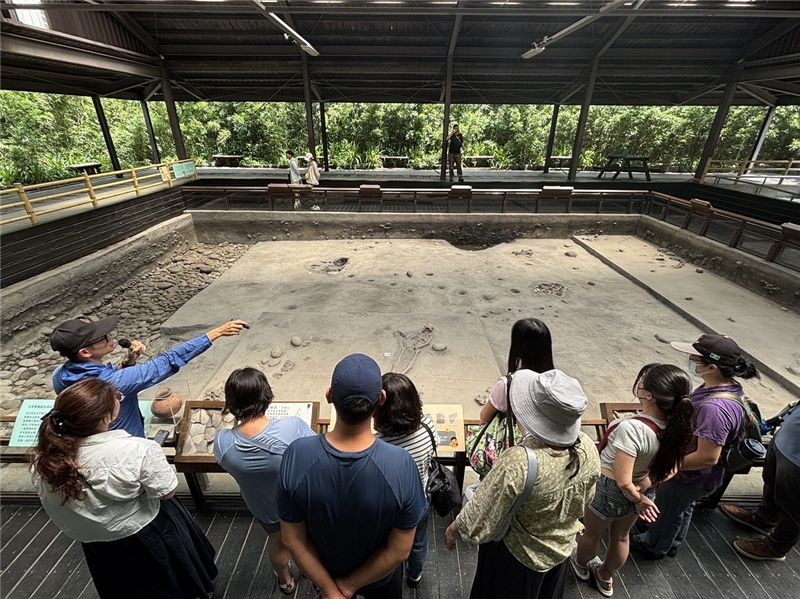
Beneath Xiaolai Park, located in Taichung's 7th Redevelopment Zone, lie preserved memories of a prehistoric village dating back 4,000 years! On June 13, 2026, the Taichung Cultural Heritage Department hosted the 3rd educational outreach event of the "Taichung City Archaeological Site Census Plan (Phase 1)" titled "City Unboxing: Turning the First Page of the Concrete." This on-site guided tour of the Huilai Archaeological Site, led by professional archaeologists, invited the public to unbox a thousand-year-old prehistoric culture hidden beneath the concrete of a modern, bustling city.
The Cultural Heritage Department stated that it launched the "Taichung City Archaeological Site Census Plan" last year (2025). The census covers Taichung's 29 administrative districts across three planned phases, aiming to review known archaeological sites as well as discover new ones. Discovered in 2002, the "Huilai Archaeological Site" is a highly representative cultural heritage landmark in Taichung's 7th Redevelopment Zone. Archaeological excavations and in-depth research confirm that the site contains two prehistoric cultural layers: the earliest dates back 4,000 to 3,500 years ago to the Niumatou Culture (Mid-Neolithic Period), characterized by cord-marked pottery, while the latest extends to the Fanzaiyuan Culture of the Metal Age.
The Huilai Archaeological Site is of crucial significance for studying prehistoric settlement patterns in central Taiwan. Unearthed artifacts from the Niumatou Culture include important items such as triple-cup stem bowls (dou vessels), ceramic spindle whorls, stone adzes, and semi-lunar stone knives, while animal bones, turtle shells, and rice were excavated from the Fanzaiyuan Culture layer, illustrating an economic pattern that equally emphasized agriculture and fishing. Furthermore, the excavated artifacts, features, burials, and postholes serve as a vivid 3D map of a prehistoric village, bearing witness to Taichung's historical transformations spanning thousands of years.
The Cultural Heritage Department further explained that to balance modern urban development with the preservation of archaeological cultural heritage, the Huilai Archaeological Site adopted a minimum-density development plan in 2009. It was designated as "Xiaolai Park" to minimize damage to the site. Replicated archaeological excavation pits are displayed within the park, featuring replicas of human and animal bones, postholes, and a miniature model of the Fazi River basin, allowing Xiaolai Park to serve as a space for cultural heritage preservation, social education exhibitions, and urban greenery.
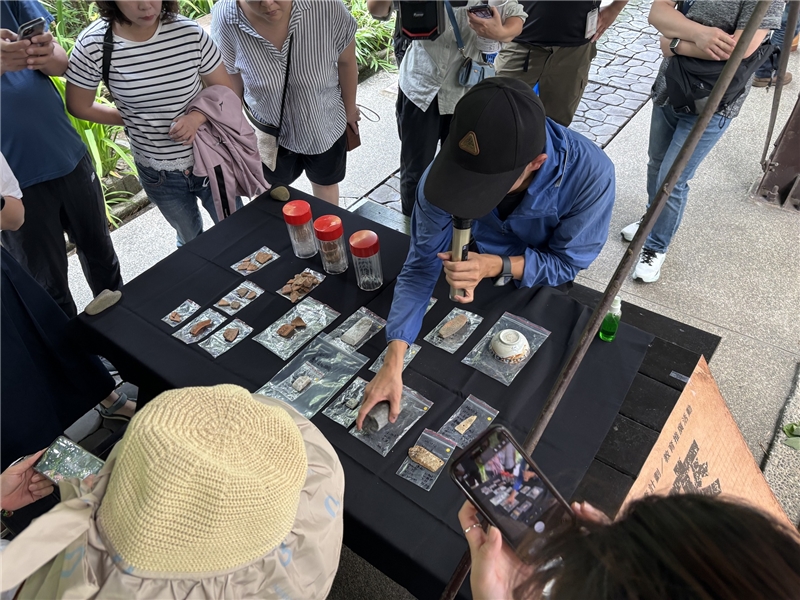
On the day of the event, Hsiao Ching-sung, project manager of the "Taichung City Archaeological Site Census Plan (Phase 1)," led the public into the archaeological display pits in Xiaolai Park for guided explanations. He also specifically introduced the Cultural Heritage Preservation Act, explaining the inseparable relationship between archaeological site preservation, urban development, and legal protection under the act. At the end of the tour, artifacts unearthed from other contemporary archaeological sites were presented for the public to observe and touch. This immersive guided tour experience brought the three archaeological educational outreach events of the "Taichung City Archaeological Site Census Plan (Phase 1)" to a perfect conclusion.